#BelieveAces Part 2: On the refusal to accept labels

I’ve been thinking a lot about the removal of labels.

Largely posthumously, like in the cases of Stephen Donaldson and Martha Shelley, activists of the 1960’s. In life they commented on how they took flak from leaders for being bi. How their relationship was treated as a scandal because they weren’t visually performing their sexuality in a way that was useful to others. This is such a clear cut case of bisexuality only being valued if it reads as homosexuality. It happened when they were alive, and it still happens when people discuss them, and their specific concern.

Another recent after death label change was done by Rolling Stone magazine. One of their staff writers, with a habit of making fun of asexuals, decided to target Yasmin Benoit for her connection to Bianca Devins. Yasmin is the creator of #ThisIsWhatAsexualLooksLike, and her path briefly, and digitally, crossed with Bianca when Bianca submitted herself to the AsexualLooks instagram. This disbelieve of not only Bianca’s words, but Yasmin’s is endemic of society at large.

People don’t believe asexuals when they speak.

Even more recently, a Wikipedia editor refused to accept that labeling of a celebrity as ace as proof. Locking the page, and claiming that the actress was being too ambiguous. This real time erasure makes coming out an arbitrary bar people need to clear in order for outsiders to consider them as the words they use for themselves. And the point here isn’t even about trying make sure a label sticks to someone. Or the historical record either. It’s to point out that at all points, asexuals say something and are not fully believed at any time of that journey.

A visit to our FuckYeahAsexual inbox shows countless cases of this happening in countless ways. A quick scroll shows three messages raising the concern of people denying their label for wanting to have children. Two express concern that asexuality is being confused with virginity and having their labels denied eitherway that coin falls. Other asks are a point blank statement. “I’ve tried to explain asexuality to people and they don’t get it.”

Asexuality is a sexuality of it’s own, it intersects with queer theory, but like the field of study the reductionist review of outsiders deciding what is of isn’t asexuality is serving no one, and nothing besides ignorance.

Allosexuals need to interact with aces in a way that allows for our infinite diversity. Not only in race, gender, and ability, but behavior. There isn’t a single facet of asexuality that is a fixed point. Any idea to the contrary holds us all back. It’s high time we start believing aces and the words they say. Other people’s sexuality don’t need to meet any’s preconceived ideas of it.

It is my hope that when we start believing people, we will start truly seeing them as the people they are, or were… Whether they be, bisexual, asexual, other any other queer identity.

– Roses from a digital typewriter

Press Start Cover Reveal!

It’s here! (ノ◕ヮ◕)ノ*:・゚✧
This beautiful leap day I get to show off our newest book cover!!

Press Start Front Cover

It’s so cute! We wanted it to really showcase the story’s inspiration of Pokemon Go and other party games. The map is actually based on a cool area around where John lives. If you need a break from everything because the world sure is wild this year, you’re going to love this soft playful story.

I can also officially announce the release day of May 5th! The paperback and ebook version will have an exclusive chapter. Until then, be sure to add it on Goodreads!

Here’s the blurb if you want to learn more:

A new app has turned the whole world into an augmented playground. By reinventing up retro party games, HoloHeroes makes sure it has something for every player. However, Loren worries she’s been missing out. The death of her father and a move across the country makes it feel as though she has to start life over. As a sweet sixteen gift, Loren’s given Ghost Glasses, allowing her to be her own HoloHero. Local meetups serve as a jumping-off point to make new friends, find herself, and win cash prizes. But what started as casual fun turns into an accidental rivalry with a veteran champion of the game and a race towards the national stage.


#BelieveAces Asexual Label

#BelieveAces – Part One: Hard truths about asexuality

There are some hard truths about asexuality that we get in the Fuck Yeah Asexual ask box. It’s such a high volume. But we do our best to answer them all like a one on one conversation with someone. Occasionally, they there’s a curious statement. And if I’m really lucky, it will rattle a bigger thought forward. Something so big, and in need of a conversation.

Today, I introduce the #BelieveAces mini-series. Its goal is to show the endless amount of ways that people are not believing the community. That’s one of the first truths about asexuality you learn.

We have an FAQ, but there’s a question not on the list that’s just as popular. “People keep using this script when they talk to me. If I say something off book, I’m dismissed.”

It’s enough to fill a bingo card. “Oh, you haven’t met the right one.” “Oh, you’ll want kids someday.” “The abuse you face was caused by something else.” “Maybe you are just lying about what happened in the first place.”

The fact that abuse victims are not believed. Mixes in with the fact that bisexuals and asexuals have the highest rates of abuse. We must also consider the fact that ace communities over-index in having trans people.

There’s a culture of disbelief of our community from outsiders. That’s the hardest truth of asexuality.

The demands placed on asexuals and the wider queer community are so often an arbitrary bar. They demand that sexuality become performative. “Be out how we say. With the words we declare are okay.” Aces are told they must simultaneously have had sex. And abstain in order to know if it’s for them. Abuse, or mental illness, or anything that doesn’t make us a gold star individual is further used to not only undermine personally. But us as an identity. By treating asexuality, and being out, as a spectacle we will lose and have lost, so much to erasure.

People rarely discuss the reasons asexuals have sex. The occasional article about it usually frames the topic as a compromise for an allo partner. But still does not dig down to the why of the behavior. And there’s a ton of whys. I know my mods and I do our best to point out every reason. Including boredom. But widely? It’s a good day if asexuality isn’t treated exclusively as life long virginity.

The seemingly contradictory facets of asexual lives make it hard for aces to see themselves. It isn’t because aces aren’t diverse. It’s caused by disbelief on a large scale. The general social unawareness that asexuality is one thing. But there’s a culture of not pathologizing those who do.

Aces who marry are omitted. Historical figures with any known sexual history are excluded. Those who stayed chaste their whole life are still excused away. Some of this is done in bigotry. Some isn’t. That is why sharing our stories, and sometimes even the complications in facing compulsory sexuality and abuse are so important.

Even recent history is too easily forgotten is another one of those hard truths about asexuality.

Every single ace story has something important to add to the conversation. Each with their own intersections that connect us to others.

The spark of this article was an ask that said: “I think asexuals are more present than others.” On the surface that can find sound like the 1960s line: “If we give up men, we will have more time for the revolution!” But one of the hard truths about asexuality, it’s context had a spin on the idea that put a spotlight on the assumed.

A highly specific and particular ace point of view that unifies every ace. A-spec people aren’t really playing at anything in social situations, at least not the same love games as everyone else.

This isn’t a problem either. An asexual point of view can actually help people be more present in certain moments. The harmful lies of heteronormativity, compulsory sexuality, and amatonormality can be further disproved by our existence at the table already.

Not only does this help asexuals be aware of their choices when navigating through their own lives, a feat more distracting than it is a time-saver, but our collective possibility helps to point out that falsely assumed. Asks people to throw away their social scripts of harm systems, and may allow people to become more fully present in their own choices in the hopes that their life is liberated. That it becomes lived by their own design.

Maybe A stands for more than our identities.

It as easily could be for Anarchy. For that’s the accidental call of any a-spec person. The last of today’s hard truths about asexuality. Live your life without needing any authority besides your own wishes. Find your absolute freedom of self. This is not a truth unique to our community, but the heart of any revolution.

– Roses from a digital typewriter
Start reading Part Two: The Refusal To Accept Labels

#BelieveAces – Part One: A universal truth and a bar to clear

We get so many asks in our tumblr ask box. It’s such a high volume that we do our best to answer them all like a one on one conversation with someone. But occasionally, they will be less of a question a far more of a statement. And if I’m really lucky, they will rattle a bigger thought forward. Something so big, and in need of a conversation that I turn those thoughts into an article. Today I’d like to introduce my #BelieveAces mini-series. Its goal is to show the endless amount of ways that people are not believing the words this community says.

We have an FAQ, but the question not on the list that’s just as popular ‘people keep using this script when they talk to me, so when I say something, it gets dismissed.

It’s enough to fill a bingo card. “Oh, you haven’t met the right one.” “Oh, you’ll want kids someday.” “The abuse you face is caused by something else” “Maybe you are just lying about what happened in the first place.”

The fact that abuse victims are not e believed, and that bisexuals and asexuals have the highest rates of abuse of sexualities. That fact that ace communities over-index in having trans people among them. Further goes to prove the culture of disbelief of our community from outsiders.

The demands placed on asexuals and the wider queer community are so often an arbitrary bar we are told to clear. They demand that sexuality become performative. “Be out how we say. With the words we declare are okay.” Aces are told they must simultaneously have had sex and abstain in order to know if it’s for them. Abuse, or mental illness, or anything that doesn’t make us a gold star individual is further used to not only undermine us personally but us as an identity. By treating asexuality, and being out, as a spectacle we will lose and have lost, so much to erasure.

People rarely discuss the reasons asexuals have sex, for good or ill. The occasional article about it usually frames the topic as a compromise for an allo partner. But still don’t really dig down to the why of the behavior. And there’s a ton of whys.

I know here, my mods and I do our best to point out every reason including boredom. But widely? It’s a good day if asexuality isn’t treated exclusively as life long virginity.

The seemingly contradictory facets of asexual lives make it hard for aces to see themselves, but that isn’t because aces aren’t diverse. It’s caused by the disbelief of everyone else on a larger scale. The general social unawareness that asexuality is an option and the undermining when it is suggested.

Aces in history are too easily forgotten. Ones who marry are omitted, historical figures with any known sexual history are excluded. Those who stayed chaste their whole life are still excused away as something else. That is why sharing our stories, and sometimes even the complications in facing compulsory sexuality and abuse are so important.

Every single ace story has something important to add to the conversation. Each with their own intersections that connect us to others.

The spark of this article was an ask that said: “I think asexuals are more present than others.” On the surface that can find sound like the 1960s line: “If we give up men, we will have more time for the revolution!” But in truth, it’s context had a spin on the idea that put a spotlight on the assumed.

A highly specific and particular ace point of view that unifies every ace. A-spec people aren’t really playing at anything in social situations, at least not the same love games as everyone else.

This isn’t a problem, because instead of just needing to be dealt a different hand, an asexual point of view can actually help people be more present in their moments. The harmful lies of heteronormativity, compulsory sexuality, and amatonormality can be further disproved by our existence at the table already.

Not only does this help asexuals be aware of their choices when navigating through their own lives, a feat more distracting than it is a time-saver, but our collective possibility helps to point out that falsely assumed. Asks people to throw away their social scripts of harm systems, and may allow people to become more fully present in their own choices in the hopes that their life is liberated in a way that becomes of their own design.

Maybe A stands for more than our identities. It as easily, and something truthfully stands for Anarchy. For that’s the accidental call of any a-spec person. Live your life without needing any authority besides your own wishes. Find your absolute freedom of self. This is not a truth unique to our community, but the heart of any revolution.

– Roses from a digital typewriter
PS: If youfollow through the ko-fi link a typewriter view is included so you can see my raw thought process of finding words as I wrote it!

LGBTQ Mircolabels – The Address of Your Soul

LGBTQ Mircolabels are much talked about. In this short article, I’ll explain how looking at identity labels as addresses is a really good way methodology. And how we can’t forget that LGBTQ mircolabel’s focus on intersectionality is not only normal, but actually a healthy thing.

I’ve always loved the term intersectionality. I think it’s a brilliant word that gives you a visual right off the bat. It was coined black feminist scholar Kimberlé Williams Crenshaw in 1989.

“Stay in your lane” also fits this instantly understandable visual. While to me it sounds like AAVE, the earliest date for the metaphor from 1972 and largely something football players would hear from coaches to remind them to focus on their own task on the field. In recent years, it means to stick to your area of expertise.

Sports metaphors and black feminist theory don’t often overlap. But we can take these visuals metaphor further to explain a large number of problems I see daily in the queer community.

LGBTQ Mircolabels vs Umbrella terms

Often times people feel they have to choose between the two and if they pick an umbrella term it’s either a lie or holding something back. But we‘d all be much better served by looking at these two things as part of the same address.

Some people very much identify with their state. New Yorkers for example. In this case, New York refers to both the city and the state. For many, that’s enough. It’s all people need to know, but others may use a micro-label as a stamped letter that uses a street address or a zipcode to be even more precise.

Which parts of your ‘address’ you tell someone greatly depends on the situation. The info you share on with someone out of the country will differ from the info you share with people in your apartment building. One doesn’t supersede the other.

While you might know where you are, other people are lost in a big city and need the exact words right down to the GPS coordinates in order to find themselves, each other, or call for specific help. This sort of location pinpointing saves lives. As valuable as that information is, plenty of people will never need to get that specific in their daily lives. Those details still exist even if they aren’t known, mentioned, or are grouped as one.

A lie I often hear is that LGBTQ microlabels prohibit change, hide your “real” identity, or other assimilation type lies. I have people come to me all the time worrying about labeling wrong. They want a label, they knew what feels like them, they even recite the definition of the word, but… what if…

And my answer is always, “and what if?” If it feels like home then that’s where you should be right now. And if for any reason it stops feeling like home, there shouldn’t be shame in “moving” to a new address. It doesn’t make your first address fake. You lived there for a time, and even if it wasn’t fully “your address” it was enough of a safe place for you to grow. Some people move often. Others don’t. There shouldn’t be any stigma in it.

In order for a soul to be free, it must have the ability to move or stay put as it desires. Be able to build a nest as intricate or as simple as they want. Labeling is no different. Even if it takes years or micro-labels to get everything just right.

When we are limited to “gay or straight” that is not freedom. LGBTQ mircolabels says these are all the intersections I cross. It makes assimilation harder because it’s a reminder that no identity is just one thing. Society just ignores labels that are in power.

Our truths will never be nurtured if we refuse to admit a forest is made out of individual trees. On average there are around 3,700 trees in an acre, each a little different than the one next to it. In that same group, there are nearly 70 different species of trees. Why would humans be any less diverse?

Do you need to learn every about tree or address in the phone book to be a decent person? Absolutely not. But it‘s dangerous, to others, to run out in the middle of the street bemoaning that certain words exist because you refused to stay in your lane when pulling up to an intersection.

Need more queer theory in your life? Check out our asexual activism tag!

The Address of Your Soul

In this short article, I’ll explain how looking at LGBTQ+ labeling as addresses is a really good way to not forget that “micro-labeling’s” focus on intersectionality is not only completely normal but actually a healthy thing. 

I’ve always loved the term intersectionality. I think it’s a brilliant word that gives you a visual right off the bat. It was coined black feminist scholar Kimberlé Williams Crenshaw in 1989.

“Stay in your lane” also fits this instantly understandable visual. While to me it sounds like AAVE, the earliest date for the metaphor from 1972 and largely something football players would hear from coaches to remind them to focus on their own task on the field. In recent years, it means to stick to your area of expertise.

Sports metaphors and black feminist theory don’t often overlap. But we can take these visuals metaphor further to explain a large number of problems I see daily in the queer community.

Mircolabels vs Umbrella terms

Often times people feel they have to choose between the two and if they pick an umbrella term it’s either a lie or holding something back. But we‘d all be much better served by looking at these two things as part of the same address.

Some people very much identify with their state. New Yorkers for example. In this case, New York refers to both the city and the state. For many, that’s enough. It’s all people need to know, but others may use a micro-label as a stamped letter that uses a street address or a zipcode to be even more precise.

Which parts of your ‘address’ you tell someone greatly depends on the situation. The info you share on with someone out of the country will differ from the info you share with people in your apartment building. One doesn’t supersede the other.

While you might know where you are, other people are lost in a big city and need the exact words right down to the GPS coordinates in order to find themselves, each other, or call for specific help. This sort of location pinpointing saves lives. As valuable as that information is, plenty of people will never need to get that specific in their daily lives. Those details still exist even if they aren’t known, mentioned, or are grouped as one.

A lie I often hear is that micro-labels prohibit change, hide your “real” identity, or other assimilation type lies. I have people come to me all the time worrying about labeling wrong. They want a label, they knew what feels like them, they even recite the definition of the word, but… what if… 

And my answer is always, “and what if?” If it feels like home then that’s where you should be right now. And if for any reason it stops feeling like home, there shouldn’t be shame in “moving” to a new address. It doesn’t make your first address fake. You lived there for a time, and even if it wasn’t fully “your address” it was enough of a safe place for you to grow. Some people move often. Others don’t. There shouldn’t be any stigma in it.

In order for a soul to be free, it must have the ability to move or stay put as it desires. Be able to build a nest as intricate or as simple as they want. Labeling is no different. Even if it takes years or micro-labels to get everything just right.

When we are limited to “gay or straight” that is not freedom. Mirco-labeling says these are all the intersections I cross. It makes assimilation harder because it’s a reminder that no identity is just one thing. Society just ignores labels that are in power.

Our truths will never be nurtured if we refuse to admit a forest is made out of individual trees. On average there are around 3,700 trees in an acre, each a little different than the one next to it. In that same group, there are nearly 70 different species of trees. Why would humans be any less diverse? 

Do you need to learn every about tree or address in the phone book to be a decent person? Absolutely not. But it‘s dangerous, to others, to run out in the middle of the street bemoaning that certain words exist because you refused to stay in your lane when pulling up to an intersection.

🌹 Reviews: Asexual Erotics

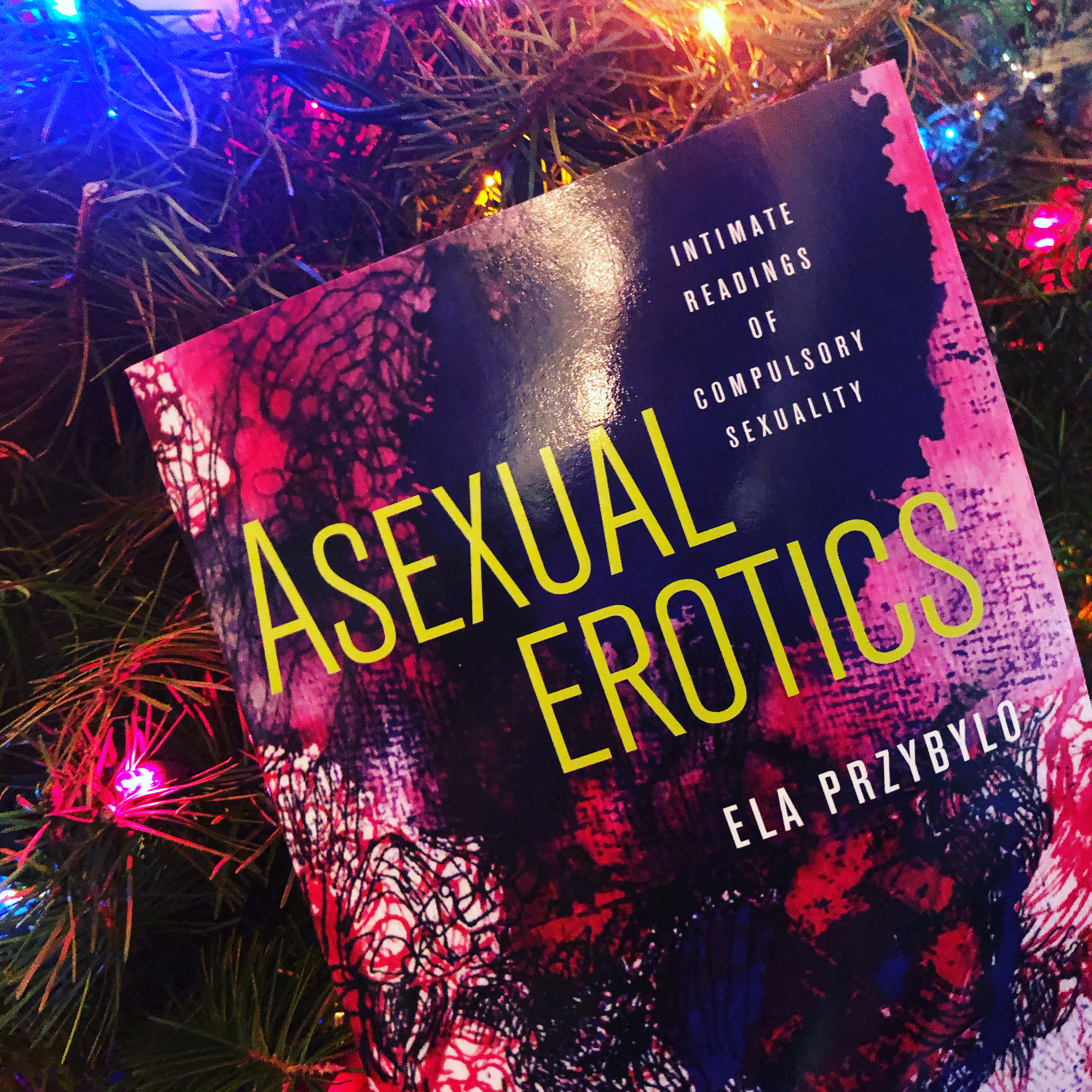
As you can imagine this book discusses erotics with a focus on asexuality. It’s introduction focused on how the meaning of erotic had changed since Freud and how more modern queer theorists define it to mean more than simply the “sexual”. The great thing but about it hitting such a specific note is this discussion is all but nonexistent when it comes to social ace places. It asks what are we missing when we make ‘erotic’ be a single note. 

The book definitely is not an introduction to asexuality, it has a strong academic voice at times that make the points less clear than they could have been, but if you hang around queer spaces and think your life could use more theory, history, or a look at discussions of human development then this is definitely the sort of book to pick up. 

In my opinion the book also does a good job explaining how white women were rewarded for being “sexually liberated” while in the same decade people of color were and are punished in a number of ways for even the appearance of the same. In doing so, this book showcases that social change is not an absolute for all people, but varies along intersectional lines.

The book also goes over ‘political celibacy’, why it exists, how it often differs across race, and why it’s often grouped under asexuality history. It’s the first time I’ve seen a reason it’s so casually grouped and a spells out those reasons instead I’d just casually glossing over.

I feel like the chapters on childhood and ageism could have been combined for a stronger point instead of a more vague “this is a thing that people debate about”. I also found the epilogue featuring the discussion of violent entitled sexism felt like an afterthought more then an ending note. 

Despite my less than rave review for some chapters, overall the book left with me new things, ideas, often history nearly lost to time to consider when discussing how complete freedom can be gained for all. Here’s a few quotes I haven’t posted in our “ref” tag or on twitter that I enjoyed. 

“It is only through asexuality that a sufficient critique of compulsory sexuality as limiting to people across spectrums and different positionalities can be developed.” 

“Where there is queerness there is also asexuality.” 

If you’re curious to read more you can get your own copy here.

🌹Rose Reviews: Asexual Erotics

Asexual Erotics

Asexual Erotics, as you can imagine, discusses erotics with a focus on asexuality. The focus is how the meaning of erotic had changed since Freud. How more modern queer theorists define it to mean more than simply the “sexual”. Packed for with historical examples of black and lesbian activism. The great thing about about hitting such a specific note is this discussion is all but nonexistent elsewhere. It asks what are we missing when we make ‘erotic’ be a single note.

The book definitely is not an introduction to asexuality.

It’s strong academic voice at times. This makes some points less clear than they could have been. If you hang around queer spaces and think your life could use more theory or history. Maybe even wish those discussions tossed in of human development. Then this is definitely the sort of book to pick up. 

The book also does a good job explaining how white women were rewarded for being “sexually liberated”. While in the same decade, people of color were punished in a number of ways. For even the appearance of the same. By doing so, this book showcases that social change is not an absolute for all people. But varies along intersectional lines.

The book also goes over ‘political celibacy’. Why it exists, how it often differs across race, and why it’s often grouped under asexuality history. Dig in to find out why those groups are so casually always put together, and glossed over. 

My criticism about Asexual Erotics? The chapters on childhood and ageism could have been combined for a stronger point. Instead of a vague “this is a thing that people debate about” tone. The epilogue featuring the discussion of violent entitled sexism felt like an afterthought more then an ending note. 

Despite my less than rave review for those chapters, overall the book left with me plenty. New ideas and history nearly lost to time. Things to consider when discussing how complete freedom can be gained for all. Here’s a few quotes I haven’t posted on our social media accounts.

“It is only through asexuality that a sufficient critique of compulsory sexuality as limiting to people across spectrums and different positionalities can be developed.” 

“Where there is queerness there is also asexuality.”
– Asexual Erotics 

Curious to read more? You can get your own copy here! If fiction is more your style, check the rest of our Rose Reviews series here.

My New Book Deal:

I’m still excited from Suicide By Ghost’s release a few months ago, but I got more news today! It’s honestly the news I hoped people knew were coming every since Creative Aces Publishing signed Jonathan Lopez. Our newest, PRESS START is such a cute story about having fun while healing. I think it’s going to feel like a breath of fresh air for everyone.

Here’s a transcript of the publishing announcement:

PRESS START from Rose Sinclair and Jonathan Lopez, a lighthearted novel pitched as Yuri On Ice meets Pokemon Go, in which Loren, a queer teen with a pension for creative problem solving when it comes to a new augmented reality gamed called Holo Heroes, is set for publication Summer 2020 by us at Creative Aces Publishing.

🌹 Reviews: Waking Up The Sun

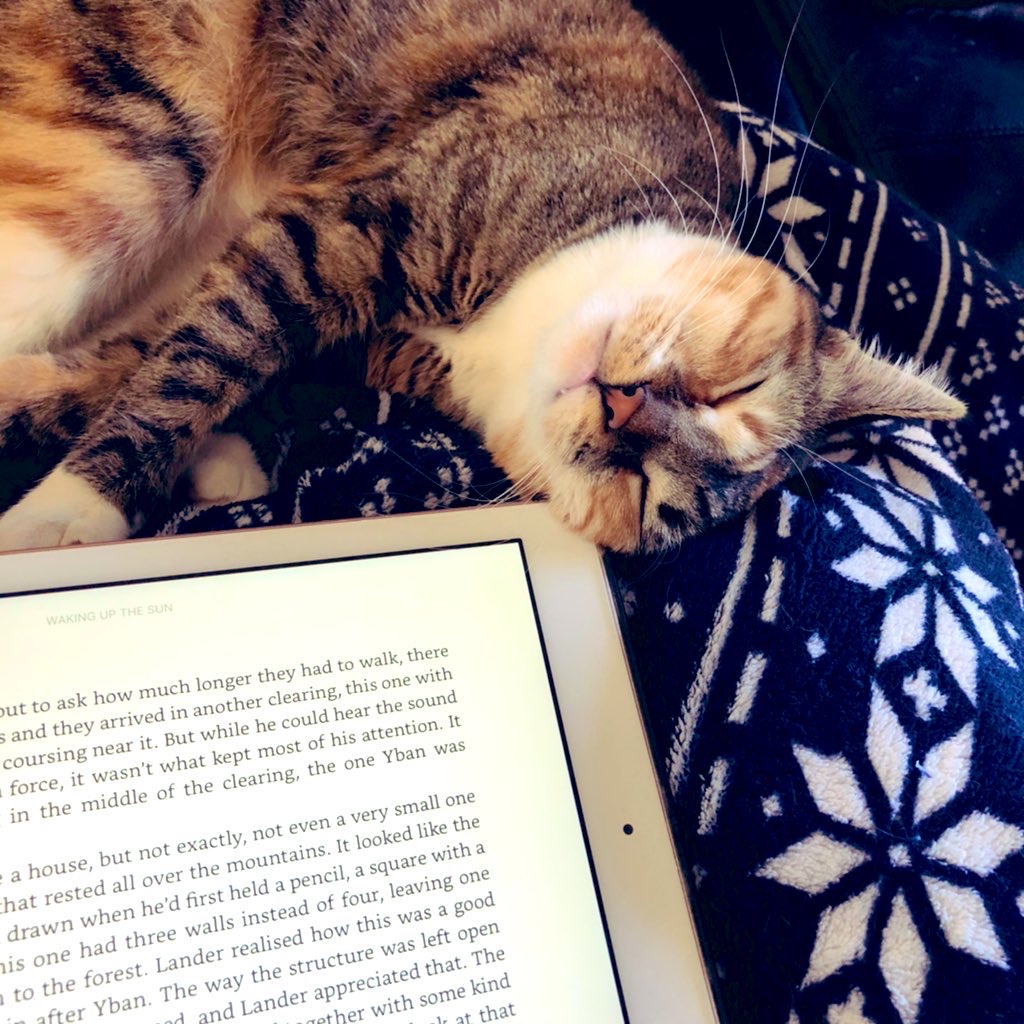
Waking Up The Sun front loads a protagonist who has anxiety and has already learned ways to cope with it. It mentions magic almost right away too, but my favorite part of that is that a potion is considered magic instead of just having a spell go “cure” him. It’s a great bit of world building I wish more things had. Having a lead character who has to consider their racing thoughts and find medicine because that’s part of their basic needs is so a plot point, instead of a casual one off line. That’s amazing to see.

Around the 20% mark you see the consideration of being lost in the woods and having to wash your clothes. These are such small things that most writers just ignore because they think it will ruin— whatever. But these are the exact things that makes Waking Up The Sun real and something that feels new.

The only criticism I have of this was I thought the writing could be tighter. Sometimes I thought why is this being mentioned now, or at all. It may not be the best read for the sex repulsed for similar reasons but maybe this review can serve as your content warning.

With that said, this book is why I like to read from LGBTQ authors, generally found from small publishers. They have a number of important things that aren’t found elsewhere. Both men in the pairing are sweet. Awkward only in an realistic way instead of being an often sexist adorkable trope. I think my favorite thing is how much they check in with each other, ask if the other is okay.

[Learn more or buy your own copy here.]